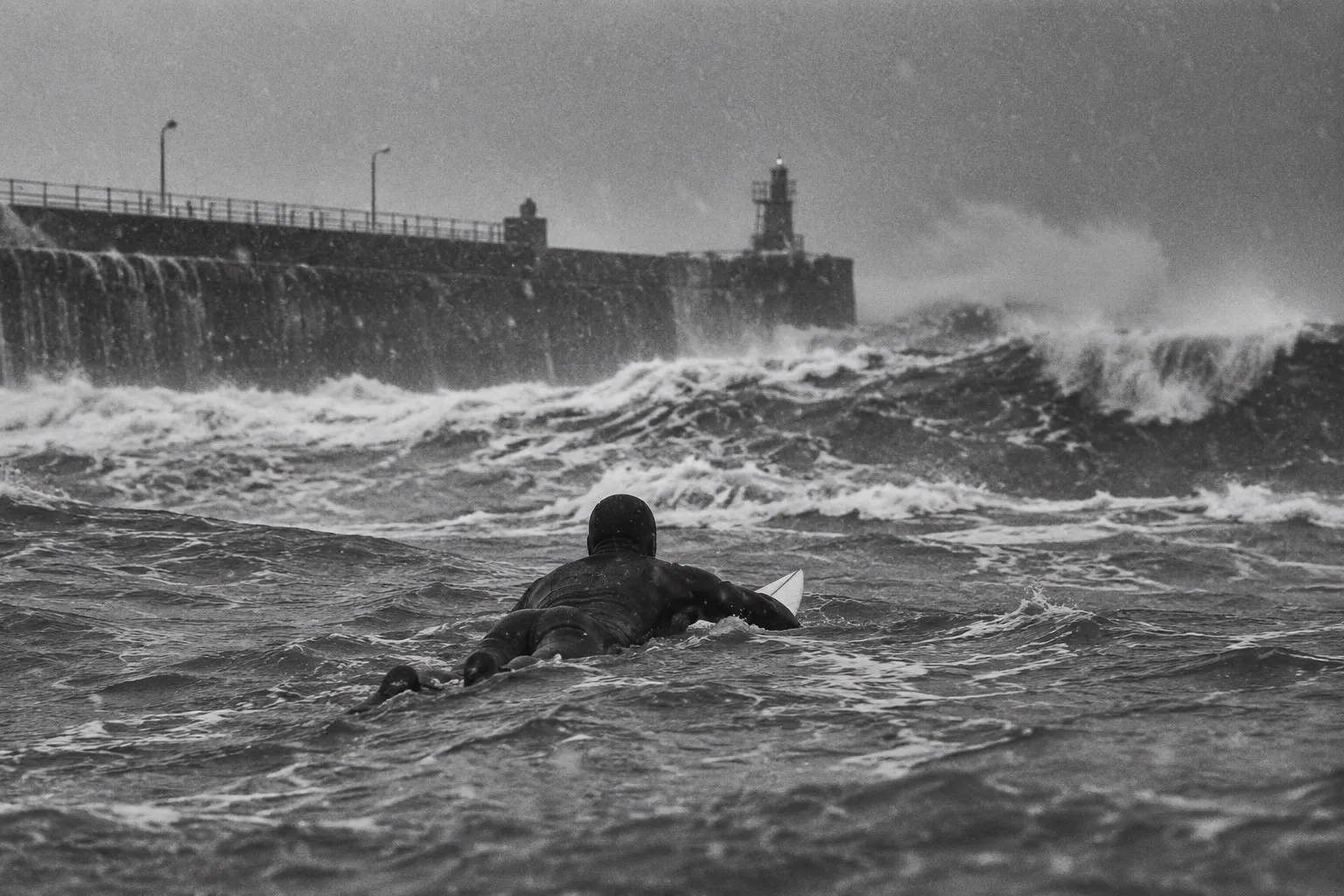
From October to March the most reliable surf in England is on the North East coast. Low-pressure systems moving across the North Sea send swell south towards Northumberland, Tyneside and North Yorkshire, and a westerly wind, which is the most common wind direction in winter, blows offshore there. The water is cold and the days are short, but on a good day it is as clean as anywhere in Cornwall and a lot less crowded.
A few of us have been driving up most winters since 2021. This is what we’ve learned.
What to wear
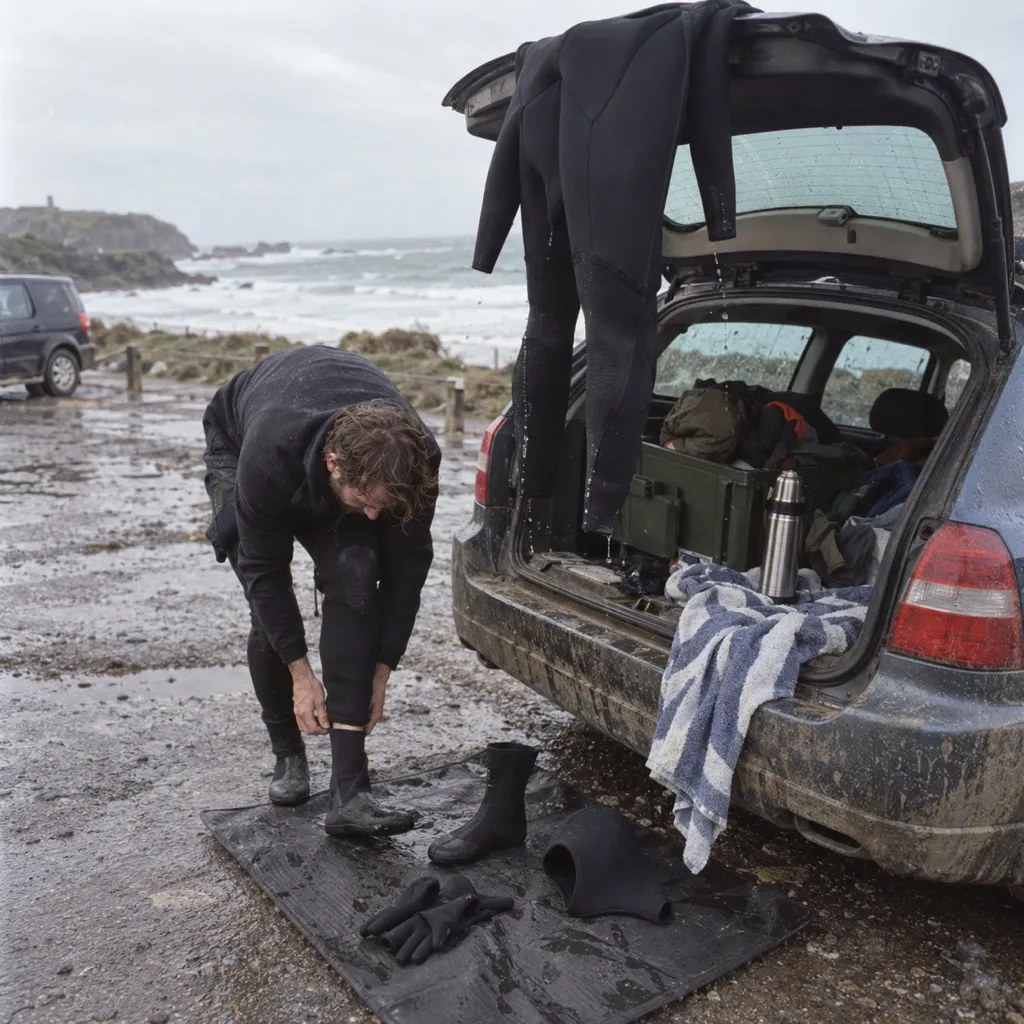
The sea gets down to about 6°C in February. You need more neoprene than you think.
- Wetsuit: a 5/4 with a chest zip is the minimum. If you feel the cold, get a 6/5 or a suit with a built-in hood.
- Boots: 5mm or 7mm, split-toe if you can find them. Your feet go numb first.
- Gloves: 5mm. Lobster mitts are warmer but harder to paddle in.
- Hood: essential. Ice-cream headaches on every duck dive are not character-building.
Get changed into a dry layer as fast as you can afterwards. A changing robe helps, a flask of something hot helps more.
Where to go
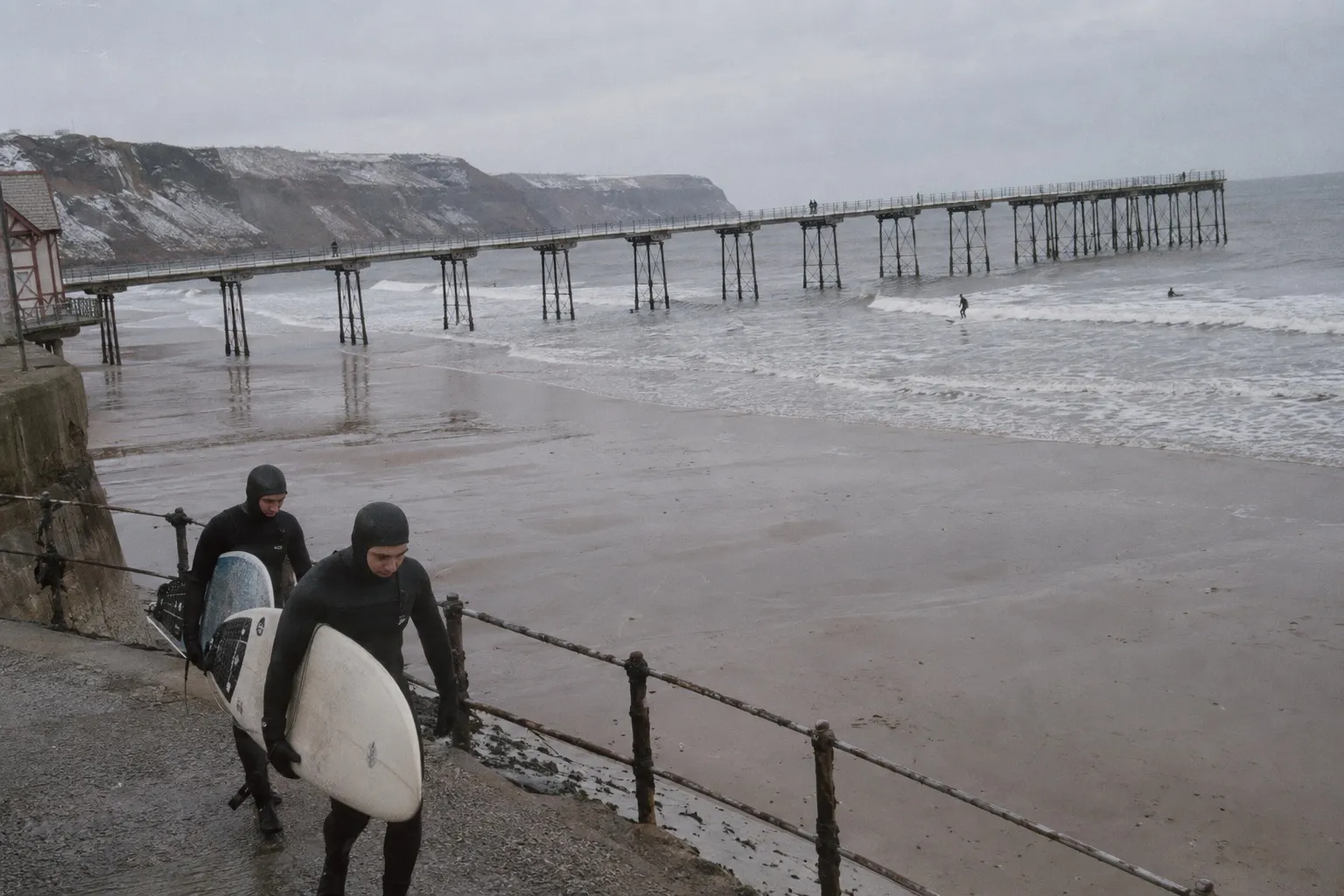
Saltburn-by-the-Sea is the easiest place to start. It has a long, forgiving beach break either side of the pier, a car park right on the front, and a surf shop and café if you need a hot drink between sessions. It can get busy at weekends.
Tynemouth Longsands is a big, open beach that picks up most swells. It’s a short Metro ride from Newcastle, which makes it the only spot on this list you can reach without a car.
Sandsend, just north of Whitby, is more sheltered and good when the wind is too strong elsewhere. Parking is limited.
There are reefs along this coast that get very good, but they’re shallow, rocky and best left until you know the area. Ask in the local surf shops. People are friendlier than you’d expect if you’re polite and don’t arrive as a group of ten.
Reading the forecast
North Sea swell has a short period compared to Atlantic swell, which means waves arrive closer together and lose their size quickly. When you look at a forecast:
- Look for a swell period of 8 seconds or more. Under that it will usually be messy.
- The swell should come from the north or north-east.
- The wind should be light or from the west. A strong easterly ruins it.
The best days often come right after a storm has passed, when the wind has dropped but the swell is still running. That can mean a Tuesday. If you can take a day off at short notice, you’ll surf better waves.
Getting there from London
It’s about five hours’ drive to Saltburn or Tynemouth. We usually leave on a Friday evening, sleep in an Airbnb or a cheap hotel, surf Saturday and Sunday morning, and drive back on Sunday afternoon. Split between four people, petrol and a room cost about the same as a Dawn Bus seat and a pub lunch each.
The train works if your board is short enough to carry on, but check the operator’s luggage rules first and avoid peak times.
Staying safe
Lifeguard patrols on this coast are seasonal, so assume nobody is watching. Surf with at least one other person, tell someone onshore when you expect to be back, and get out before you get too cold to paddle properly. Cold makes you slow and clumsy long before it makes you shiver.